
Coupang analytics: product attributes, price and fulfillment
Coupang data analysis has to read Korean-language product attributes, price, specifications, fulfillment and return costs together.
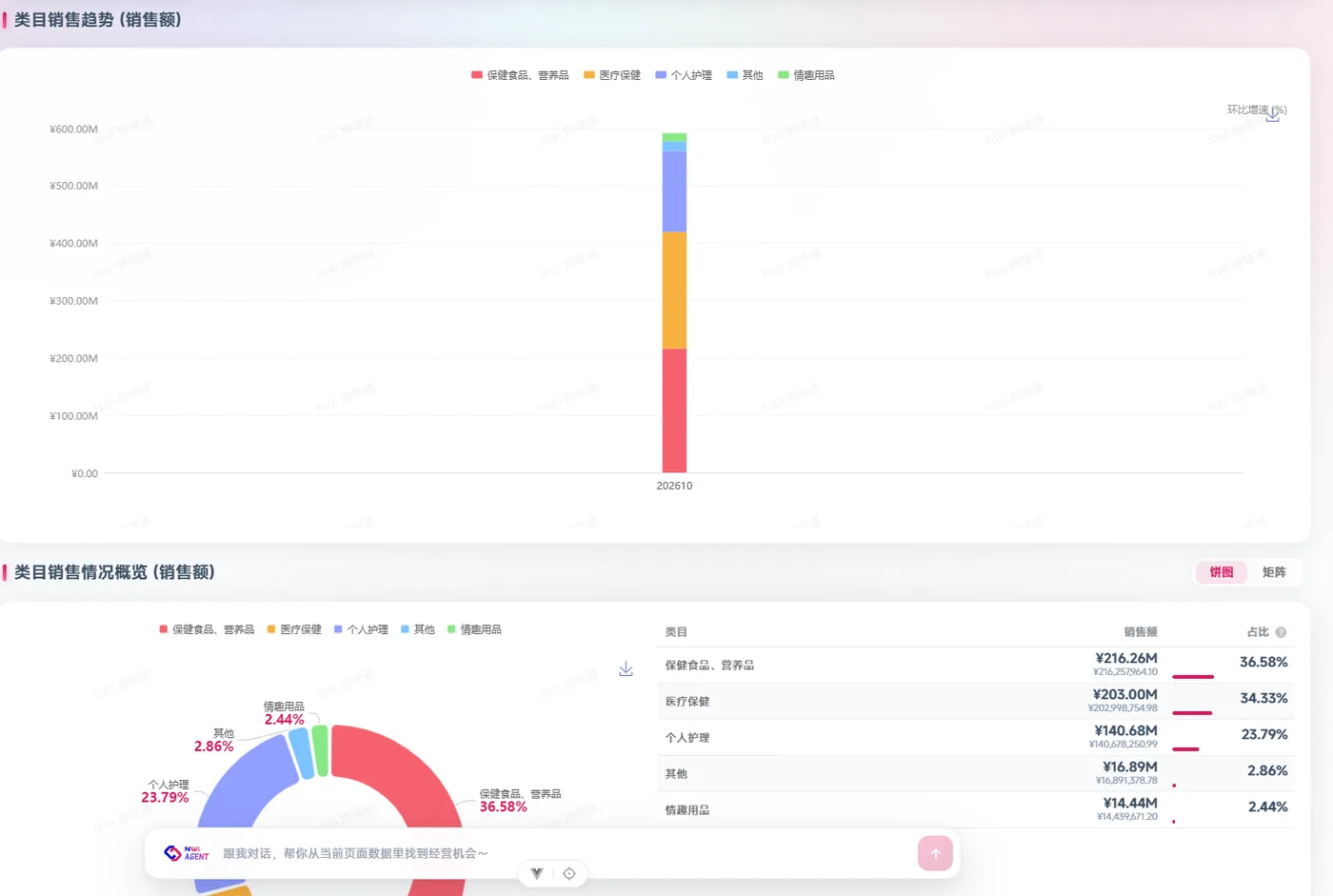
The short answer: Coupang analytics has to look at Korean-language product attributes, price, specifications, fulfillment and return costs. NWi CrossborderGo observes Coupang’s sales structure by category, brand, store and product, so teams can judge whether the Korean market is worth entering and which specifications fit local demand.
CrossborderGo applies cross-border e-commerce data analytics to Coupang categories, Korean product attributes, and fulfillment costs; available fields and sites depend on the modules you activate.
Questions you can answer with it
Which specifications and packaging do Korean consumers prefer?
Cross-reference Korean-language attributes such as specifications, packaging, bundles and certifications with price bands.
How high is Coupang’s leading-brand concentration?
Brand concentration gives the share of category sales held by the leading brands, by category.
How do you balance price band and fulfillment cost?
Put price band, cross-border logistics, local fulfillment, returns and marketplace fees into one unit contribution model.
Which categories have high return rates?
Return cost is return rate × per-unit reverse logistics and loss, and it requires first-party or service-provider data.
Korea or Japan: which market should we test first?
Compare category scale, brand concentration, fulfillment cost and compliance thresholds; Coupang coverage on this page is Korea only.
Three common workflows
Market entry
Look at category scale, growth and brand concentration first, then judge whether the Korean market has large demand with a solid top, or fragmented demand with room for new brands.
Specifications and price bands
Cross-reference Korean-language attributes (specifications, packaging, bundles, certifications) with price bands to find the combinations local consumers are actually willing to pay for.
Fulfillment modeling
Build a unit contribution model from cross-border logistics, local Korean fulfillment, returns and marketplace fees, so the selling price is not the only number in view.
Metrics and methodology
| Metric | Definition |
|---|---|
| Sales, units and average price | Market-side estimated metrics, aggregated by category and product. |
| Brand concentration | The share of category sales held by the leading brands. |
| Specification distribution | Products and sales broken down by attributes such as volume, count and packaging. |
| Price band | The distribution of units and sales after products are segmented by average selling price. |
| Return cost | Return rate × per-unit reverse logistics and loss; requires first-party or service-provider data. |
Coverage
South Korea · subject to the activation scope of the product
Marketplaces, sites, historical periods and fields are subject to the coverage matrix confirmed in the contract.
Limits and boundaries
- Korean-language product attributes need cleaning and classification and cannot be mapped directly onto Chinese categories.
- Market data is estimated; seller back-end, fulfillment and return data must be integrated separately.
- Coupang’s categories and historical depth depend on the activated modules.
- Certification, labeling and compliance requirements in the Korean market are outside the scope of the data product and must be confirmed separately.
Related pages
Coupang analytics FAQs
Can Coupang analytics show Korean-language product attributes?
You can observe Korean titles, specifications, packaging and other attributes by category and product; the scope of attribute cleaning and classification depends on the modules you activate.
What should I look at first in the Korean market?
Look at category scale, brand concentration and price bands first, then specification/packaging preferences and fulfillment costs. Looking only at the selling price easily overlooks local Korean logistics and return costs.
Can I calculate Coupang unit profit?
You can use market data to estimate prices and fees, then combine your procurement, logistics, returns and marketplace statements into a unit contribution model; market data itself cannot replace cost accounting.
How do I choose between Coupang and the Japan site?
Compare category scale, competitive concentration, fulfillment costs and compliance thresholds. Coupang suits testing Korean-language attributes and local fulfillment; the Japan site depends more on Japanese-language content and long-term brand investment.
Is it suitable if I only work on the Korean market?
It suits teams that need to focus on the Korean market. If you also work on several Northeast Asian marketplaces, we recommend a multi-marketplace method rather than looking at a single market.
Want to see real Coupang data?
Bring your category and target site, and we will walk you through the data once.
E-commerce data, methods and reports
Explore NWi CrossborderGo product pages, platform coverage, data definitions and published research. Each source states its scope, definitions and limits.